


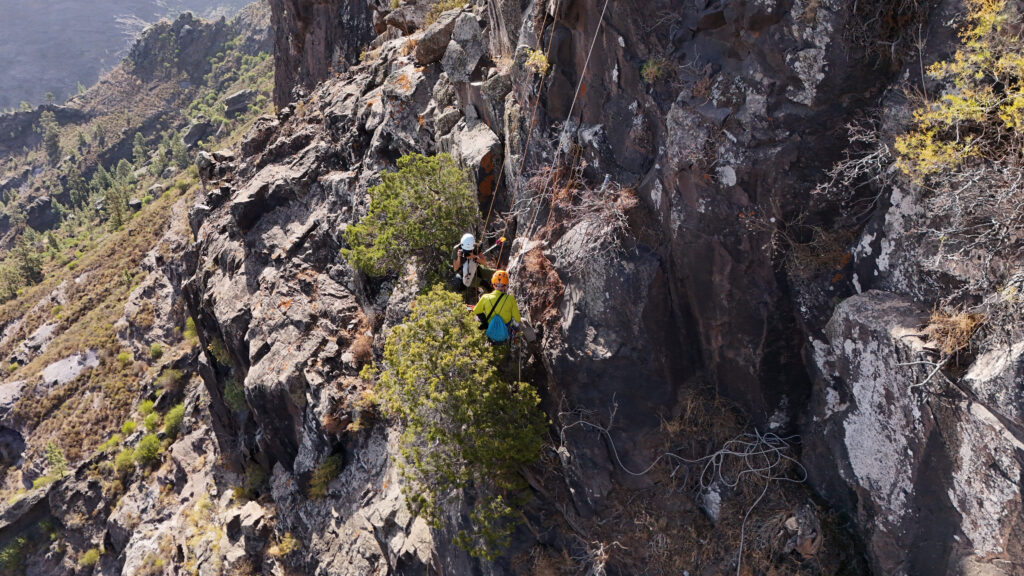
The work, carried out in the Pino Gordo area and other locations within the municipality, will provide plant material for the conservation of this species.
The LIFE24 NAT ES NewLIFE4BioIslands project has completed the collection of juniper fruits (Juniperus turbinata subsp. canariensis) in La Fuente Mountain, in an area located between the Pino Gordo and Vigaroe ravines, following several months of field monitoring and planning.
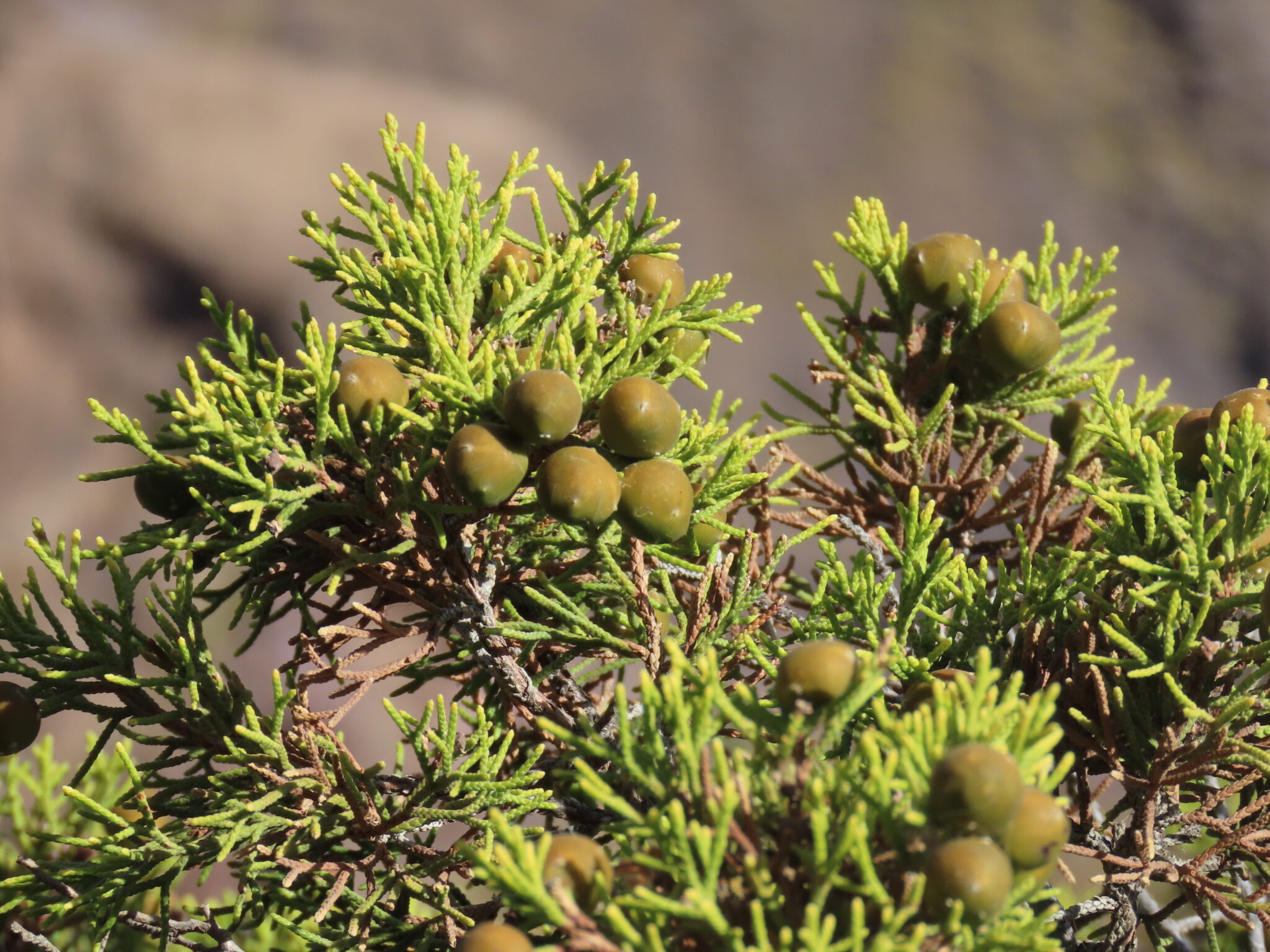
The activity marks the culmination of work that began during the summer and was affected by high temperatures and the difficulty of accessing specimens located in steep areas far from the trails.
During the first collection day, carried out in August, the team managed to reach six juniper trees and collect around 5,000 fruits from three specimens. One of the specimens still had immature fruits, so only a small sample was collected, and it was decided to continue monitoring their ripening before returning to complete the collection.
Subsequent monitoring made it possible to determine the development of the fruits and wait for the appropriate time to carry out the second intervention. Finally, the expedition carried out in October allowed the collection from this specimen to be completed.
The success of this activity was made possible thanks to the work and commitment of the participating teams, led by Marco Díaz-Bertrana and comprising GESPLAN’s Endangered Species Team and the NewLIFE4BioIslands technical team, who jointly participated in planning, monitoring and carrying out the fieldwork.
Fieldwork under demanding conditions
The location of the juniper trees made the activity particularly demanding. The specimens are found in steep and difficult-to-access areas, making it necessary to transport specific equipment and use climbing techniques and off-trail movement.
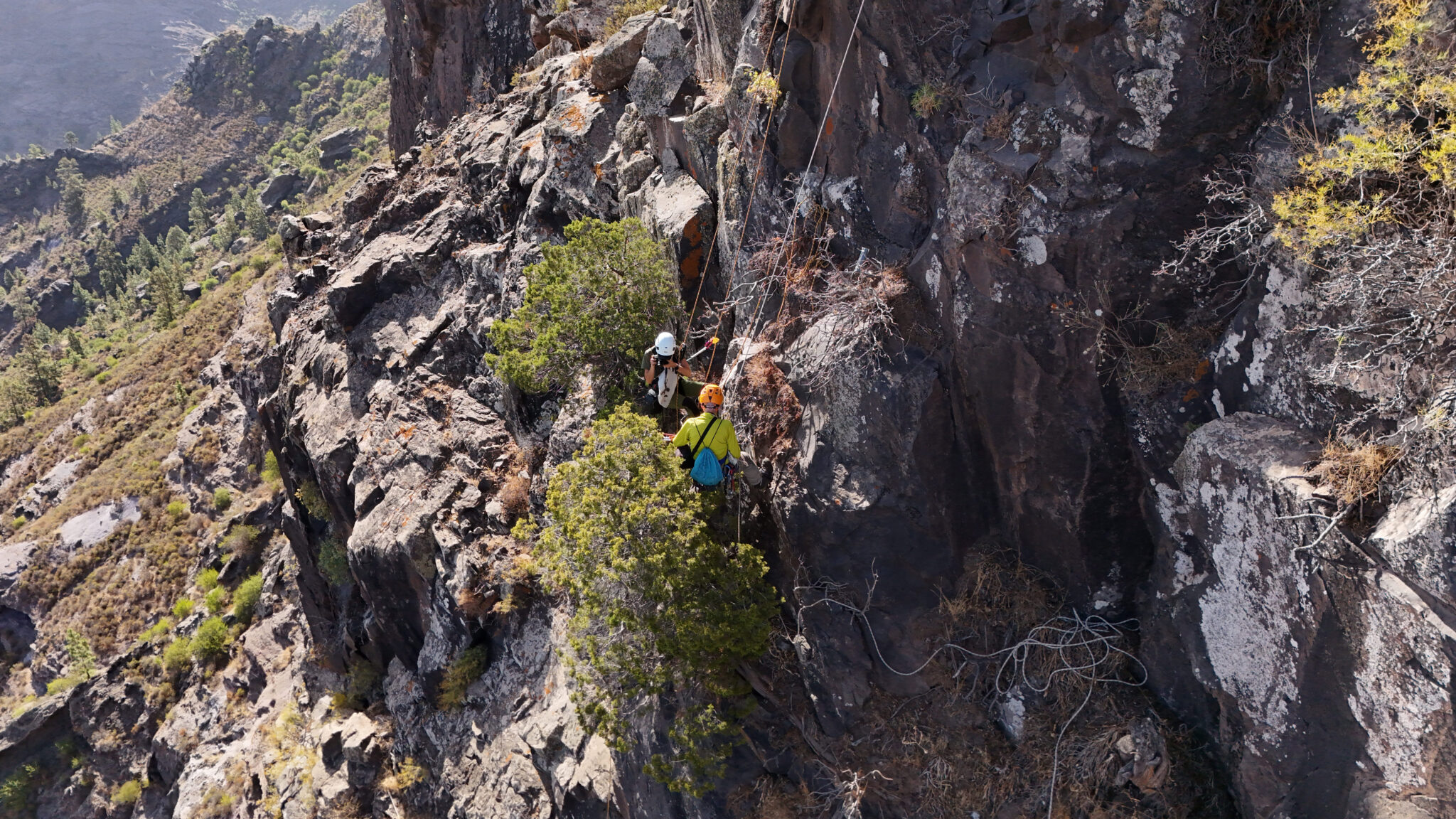
The planning of the fieldwork was also affected by the high temperatures recorded during the summer. In these circumstances, the team had to make use of the most favourable weather windows to ensure suitable conditions for carrying out the work.
Teamwork made it possible to carry out an activity combining knowledge of the territory, fieldwork and specific techniques for the conservation of the islands’ plant heritage.
A seed reserve for conservation
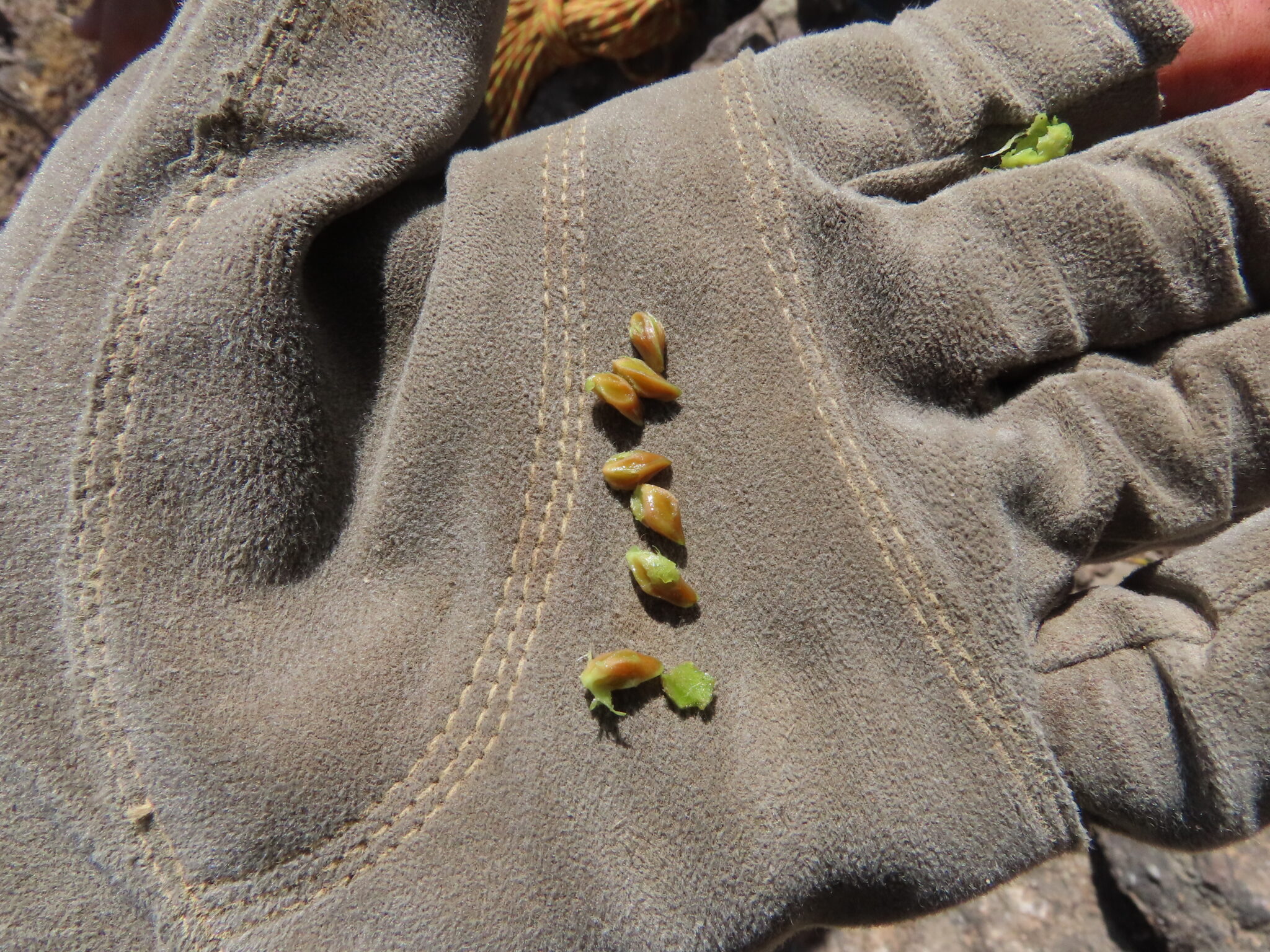
The results obtained during the first phase of the campaign were particularly positive. Opening several fruits showed that they contained between three and six seeds, resulting in an estimated total of around 15,000 seeds from the fruits initially collected, based on the minimum number of seeds per fruit.
The initial assessments carried out by specialised personnel also confirmed the good quality of the fruits and seeds, which showed appropriate development.
This plant material represents a valuable resource for conservation work, as it provides seeds collected from specimens located in their natural environment and contributes to generating knowledge and resources for future conservation and propagation activities.
NewLIFE4BioIslands: conserving island biodiversity
This activity forms part of the work carried out by NewLIFE4BioIslands, a European project aimed at strengthening the conservation of biodiversity in island ecosystems and improving the tools available for the recovery of species and habitats.
The collection of seeds from species of conservation interest is one of the activities that contributes to these objectives, generating plant material, knowledge and experience that may be essential for future restoration and conservation actions.
The work carried out in La Fuente Mountain is also an example of the importance of collaboration between the technical and specialised teams involved in the project. The knowledge of the terrain and the species provided by Marco Díaz-Bertrana, the work of the Endangered Species Team, and the coordination and support provided by the NewLIFE4BioIslands technical team have been essential to successfully complete this campaign.
With the collection carried out in the Pino Gordo and La Sabina areas, NewLIFE4BioIslands has taken another step forward in its commitment to the conservation of island flora and biodiversity, turning fieldwork and the generation of plant material into tools for protecting the natural heritage of the islands.