Project

Establishing New Biodiversity Islands in Degraded Land to Reverse Native Pollinator Decline, Improve Habitat Connectivity and Restore with Resilience

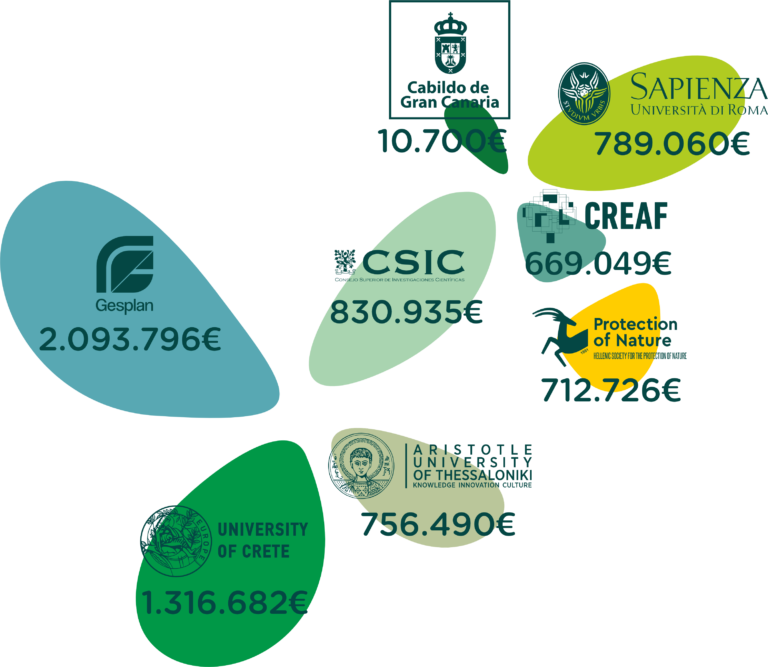
Native pollinators are experiencing an unprecedented decline driven by pressures such as habitat fragmentation, land degradation, agricultural intensification, altered fire regimes and the increasing impacts of climate change. In response this, the European Union has placed pollinator recovery and ecosystem restoration at the centre of its environmental agenda through key policy frameworks such as the EU Biodiversity Strategy for 2030, the EU Pollinators Initiative and the Nature Restoration Regulation. Within this context, the NewLIFE4BioIslands project proposes an innovative and replicable landscape restoration model based on “Biodiversity Islands” to reverse pollinator decline across degraded landscapes in five regions: Gran Canaria and Barcelona in Spain, Crete and Mt. Pangeon in Greece, and Lazio in Italy. The project is implemented by an international consortium composed of eight entities from Spain, Greece and Italy, coordinated by GESPLAN with the institutional support of the Cabildo de Gran Canaria.

The project aims to trigger natural regeneration processes in landscap The project specifically aims to increase native pollinator diversity by 20% and abundance by 30%, targeting key groups such as Apoidea, Syrphidae and Lepidoptera, while also achieving a 30% increase in overall terrestrial invertebrate abundance.

A major asset of the project is the exceptional ecological diversity of its intervention sites, habitats and target species, allowing the restoration model to be tested across a wide range of Mediterranean and Macaronesian ecological contexts. The project works across nine Habitats Directive habitats of Community Interest, including three priority habitats (6210*, 6220* and 9560*), and targets eight plant species of high conservation relevance, including the priority species Teline rosmarinifolia* and threatened endemic species such as Centaurea pangaea, Campanula pangaea and Fritillaria drenovskii. The project also includes specific conservation actions for target butterfly species, including the priority species Euplagia quadripunctaria*. Additionally, NewLIFE4BioIslands integrates citizen science and public engagement actions to improve awareness of pollinators and their ecosystem services, while working closely with local stakeholders, including livestock breeders, to ensure compatibility between restoration objectives and sustainable land-use practices. Through this integrated approach, the project aims to deliver a scalable and transferable model for ecological restoration capable of addressing current biodiversity and climate challenges across European island and Mediterranean landscapes.
Project Scope & Resources

budget dark green
  • €7,18Mtotal budget
    60% cofinancing
  • 6 yearsduration
    2025–2031
  • 5 sitesfor project
    implementation
  • 3countries
    Spain, Italy, Greece
  • 8consortium
    partners

Objectives

01Development and demonstration of the “Biodiversity Island” concept as an innovative and transferrable approach for landscape-level restoration and management.
02Harmonise and develop synergies between nature restoration and the activities of shepherds and livestock-breeders.
03Reverse pollinator decline in the project areas.
04Enhance public awareness among stakeholders, students, and the local population regarding pollinators and their ecosystem services, as well as the crucial role of invertebrates as the foundation of terrestrial food chains.
Butterflies(Lepidoptera)
Bees(Apoidea)
Hoverflies(Syrphidae)

Concept “Biodiversity Island Landscape Restoration Approach”

NewLIFE4BioIslands concept

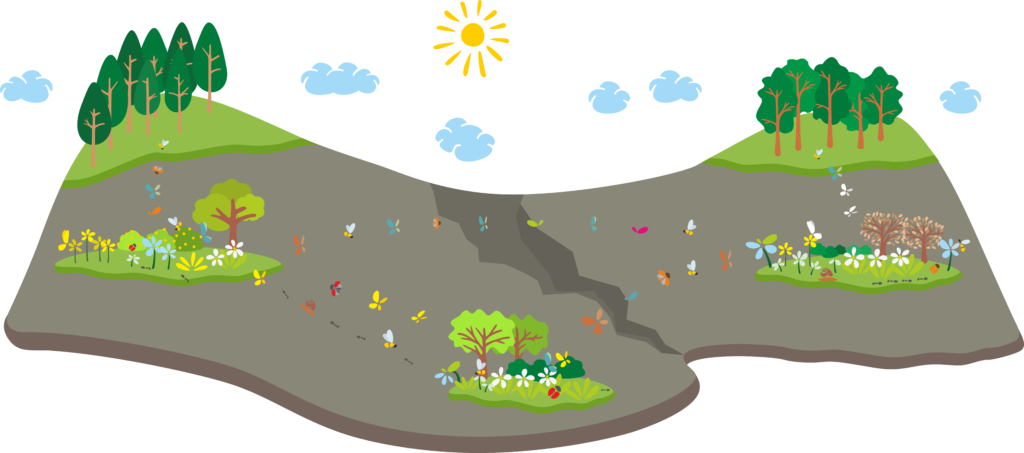
The project proposes an innovative landscape restoration concept based on the establishment of strategically distributed “Biodiversity Islands” (BioIslands) across degraded landscapes. Through small but strategically located interventions covering less than 15% of the landscape, the project seeks to trigger natural regeneration processes and restore ecosystem functionality while minimising land disturbance, management intensity and long-term maintenance needs. Rather than promoting continuous vegetation cover, ecological connectivity is restored through a mosaic of biodiversity islands that function as ecological stepping stones reconnecting better conserved habitats. This approach is based on creating resilient habitat mosaics that are better adapted to Mediterranean and island environments exposed to drought, fire and climate change. By enhancing habitat quality, ecological resilience and adaptive capacity, the project aims to reverse the decline of native pollinators and associated biodiversity while providing a practical, scalable and replicable restoration model transferable to other island and Mediterranean contexts facing habitat fragmentation, land degradation and biodiversity loss.

We conceive Biodiversity Islands, or “BioIslands”, as a core element of our landscape restoration approach. These are small restoration nuclei of approximately 200 m² established with highly diverse native vegetation communities. They are designed to create structurally heterogeneous habitats with prolonged and staggered flowering periods throughout the year, maximising the continuous availability of trophic resources for pollinators and other associated biodiversity. Functioning as ecological stepping stones, these islands increase habitat permeability, reconnect fragmented habitats and facilitate natural regeneration processes at the landscape scale. The concept prioritises the introduction of key native plant species characteristic of each project site and habitat type, creating resilient microhabitats capable of catalysing broader ecosystem recovery processes over time.

Bioisland infographics

Expected results

  • +50Farmers stockbreeders engaged
  • 370 harestored
  • 10Miyawaki Biodiversity Islands
  • 600Biodiversity Islands
  • 75.000Seedlings planted
  • 4.300Fog Water Collectors (FWCs) for irrigation
  • +60Bioblitz
    events
  • +10.000Ecological water & soil structures

Biodiversity targets

Native pollinator diversity+20%
Native pollinator abundance+30%
Terrestrial invertebrate abundance+30%

Targets to be reached by the end of the project (2031).

Citizen science

Join our BioBlitz events

A BioBlitz is an intensive biodiversity survey where volunteers work together to identify and record as many insect species as possible within a defined area, assisted by a local entomologist. Leave us your details and we will let you know about upcoming events.