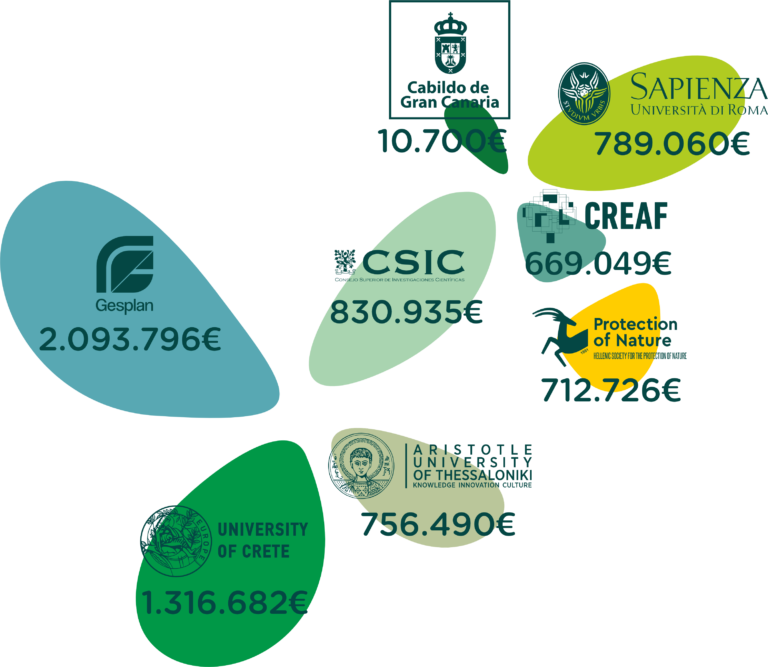
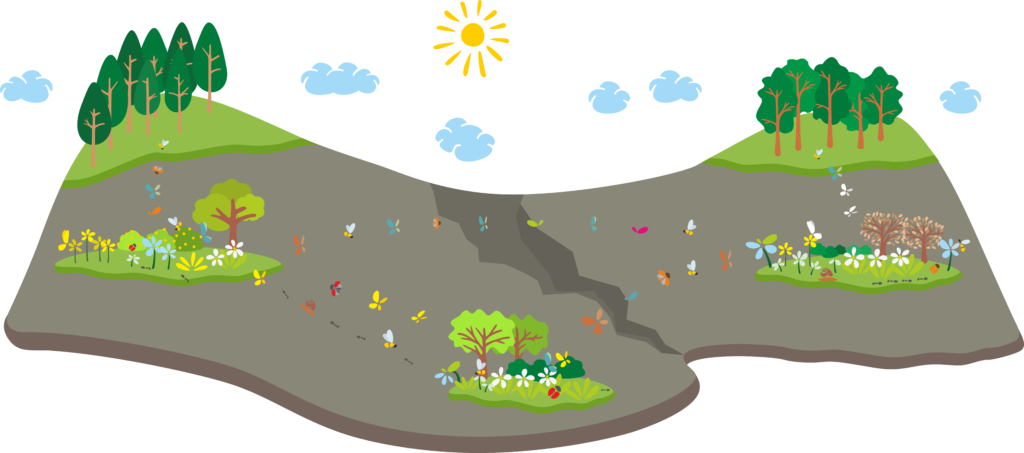
Native pollinators are experiencing an unprecedented decline driven by pressures such as habitat fragmentation, land degradation, agricultural intensification, altered fire regimes and the increasing impacts of climate change. In response this, the European Union has placed pollinator recovery and ecosystem restoration at the centre of its environmental agenda through key policy frameworks such as the EU Biodiversity Strategy for 2030, the EU Pollinators Initiative and the Nature Restoration Regulation. Within this context, the NewLIFE4BioIslands project proposes an innovative and replicable landscape restoration model based on “Biodiversity Islands” to reverse pollinator decline across degraded landscapes in five regions: Gran Canaria and Barcelona in Spain, Crete and Mt. Pangeon in Greece, and Lazio in Italy. The project is implemented by an international consortium composed of eight entities from Spain, Greece and Italy, coordinated by GESPLAN with the institutional support of the Cabildo de Gran Canaria.
The project aims to trigger natural regeneration processes in landscap The project specifically aims to increase native pollinator diversity by 20% and abundance by 30%, targeting key groups such as Apoidea, Syrphidae and Lepidoptera, while also achieving a 30% increase in overall terrestrial invertebrate abundance.
A major asset of the project is the exceptional ecological diversity of its intervention sites, habitats and target species, allowing the restoration model to be tested across a wide range of Mediterranean and Macaronesian ecological contexts. The project works across nine Habitats Directive habitats of Community Interest, including three priority habitats (6210*, 6220* and 9560*), and targets eight plant species of high conservation relevance, including the priority species Teline rosmarinifolia* and threatened endemic species such as Centaurea pangaea, Campanula pangaea and Fritillaria drenovskii. The project also includes specific conservation actions for target butterfly species, including the priority species Euplagia quadripunctaria*. Additionally, NewLIFE4BioIslands integrates citizen science and public engagement actions to improve awareness of pollinators and their ecosystem services, while working closely with local stakeholders, including livestock breeders, to ensure compatibility between restoration objectives and sustainable land-use practices. Through this integrated approach, the project aims to deliver a scalable and transferable model for ecological restoration capable of addressing current biodiversity and climate challenges across European island and Mediterranean landscapes.

 Farmers stockbreeders engaged
 370 harestored
 Miyawaki Biodiversity Islands
 600Biodiversity Islands
 Seedlings planted
 4.300Fog Water Collectors (FWCs) for irrigation
 Bioblitz
 Ecological water & soil structures